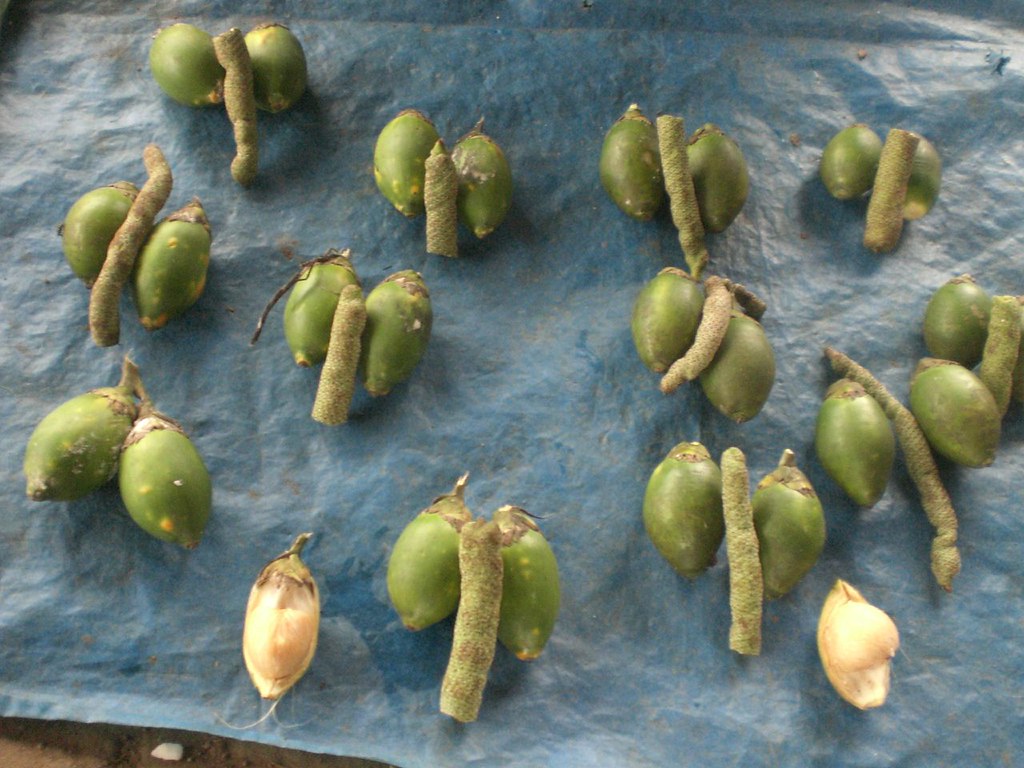
Betel nut, often called Areca seed, is the core of the Areca tree tropical tree and carries an significant role in the custom and economic structure of numerous Asian regions. The nut gets chewed for its invigorating properties, specifically when combined with betel leaf (a mixture of paan leaf and hydrated lime) or smoking tobacco. The nation of Indonesia, as it is one of the biggest cultivators of Areca nuts, has grown into a major participant in the universal distribution system for this good.
Within the nation of Indonesia, chewing Areca seed, identified as “sirih pinang,” has a rich history. It commonly used in sacred practices, group assemblies, and medical treatments. Within remote regions, notably in Sumatra, Kalimantan, and the island of Sulawesi, the custom of masticating Areca nut stays deeply ingrained. The kernel has a symbolic and cultural role, often being used as a symbol of generosity or included in traditional ceremonies, like marriage ceremonies.
Financially, the farming of betel nuts delivers livelihoods for countless small-scale farmers, primarily in areas for instance Aceh, West Sumatran regions, and North Sulawesi. For local communities, Areca palm seed functions as a valuable income-generating crop, increasing their financial means and playing a vital part in regional economies.
Indonesia’s tropical warm, tropical conditions, productive land, and wide coastal regions deliver the optimum setting for Areca catechu palms to prosper. The cultivation process follows basic steps and labor-intensive, entailing the planting of young palms, maintaining palm groves, and gathering the seeds after around five years. When the nuts are collected, the Areca palm seeds are typically sun-dried, parboiled, or fermented, in accordance with the local customs and the consumer demand.
Indonesia’s Areca nut industry maintains a multifaceted distribution network, comprising subsistence farmers, regional merchants, middlemen, and global shipment companies. In certain instances, betel seeds are distributed raw, but most commonly, they are dried to secure a greater longevity and to satisfy the preferences of overseas markets.
International demand for Areca nut, particularly in places for instance the country of India, Pakistan, the island of Taiwan, and different parts of Southeast Asia, has increased in the last few years. betel nut suppliers in Indonesia is greatly desired in those regions, where betel chewing is a cultural tradition, despite the increasing recognition of its possible health hazards. India in particular is the largest importer of Areca nuts from Indonesia. The Areca nuts are treated in several variations, for example whole nuts, halved nuts, or in a powdered state, according to the market requirements. The use of betel nut in making paan is widely practiced in the Indian subcontinent, and Indonesian betel nut is commonly favored for its premium quality and accessibility.
The island of Taiwan represents another expanding market for Indonesian betel nuts, where the habit of betel nut consumption is common, especially among males in rural areas. Traders in Taiwan choose Indonesian betel nuts due to their more affordable prices in relation to domestic production. Regardless of the profitable opportunities of the Areca nut industry, local suppliers in Indonesia confront several obstacles in growing their market reach and improving their supply chains.
Over the past few years, medical research have correlated regular betel nut consumption with oral malignancies and additional health concerns, sparkling concerns about its potential risks. This has caused some regions introducing enhanced regulations or in some cases forbiddances on the trade and chewing of Areca seed products. For example, Taiwan has implemented strategies to limit the practice of chewing betel nut in response to rising oral cancer cases. Indonesian manufacturers, as a result, face the difficulty of managing these regulations while sustaining their export markets.
Although the Indonesian Areca nut market is large, it is deficient in uniform standards for quality control and standard operating procedures. This can lead to disparities in product quality, which impacts its international reputation. Certain suppliers have started embracing more thorough organizing, ranking, and packaging standards to secure uniformity, but the overall sector still has opportunities for enhancement.
Similar to many farming products, the cultivation of betel nuts creates concerns about tree cutting and environmental degradation. In various locations, Areca plantations have expanded into previously forested areas, leading to a decline in biodiversity and disruption of ecosystem balance. Tackling these sustainability challenges is essential for the future sustainability of the industry.
The country of Indonesia is definitely not the exclusive country manufacturing Areca palm seed. Various Southeast Asian regions, such as Thailand, Myanmar, and Ceylon, also have prosperous Areca nut sectors. Indonesian manufacturers must stay competitive by guaranteeing top-quality goods, efficient supply chains, and attractive prices to preserve their stake in the global market.
Regardless of the challenges, the outlook remains promising for Indonesia’s betel nut industry. The world market for Areca nut is projected to persist with strength due to the firmly established traditions of consumers in critical markets. So long as countries including the country of India and the island of Taiwan continue to seek premium Areca nuts, Indonesian suppliers are well-positioned to satisfy this need.
For the purpose of ensuring continued growth, Indonesian Areca nut manufacturers are focusing on revamping their manufacturing processes, improving quality management, and investigating new markets. Some companies are allocating resources to modern technologies and infrastructure to enhance their processes and boost operational efficiency. Additionally, there is increasing interest in eco-friendly and environmentally friendly products, which could present additional possibilities for producers in Indonesia ready to adopt eco-friendly practices.
Indonesia’s Areca nut industry is a major part to both the regional and world economy. It supplies income to numerous small-scale farmers and fulfills the demand of international markets, particularly in the Republic of India and the island of Taiwan. However, issues such as health risks, regulatory issues, and market rivalry must be tackled for the industry to prosper in the long run. By emphasizing sustainable practices, standards of quality, and creative solutions, producers of Areca nuts in Indonesia can keep to play a vital role in the worldwide supply chain.
 Asila Finance